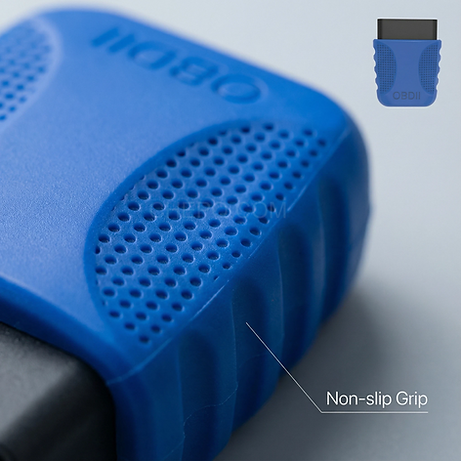
Understanding Vehicle Diagnostics including TPMS Units bands serves as imperative for specialists and admirers to a similar degree. Within the European region, OBD2 usually implements particular common CAN protocol system regulation, with diverse transmission scales influenced by respective maker. Tire Monitoring Solutions in the European region usually transmits on 315 MHz, although local differences exist. Eastern Asia presents some form of sophisticated context, with countless areas using different diagnostic strategies protocols and Pressure Sensing Networks ranges, usually falling between 315 and four hundred thirty three MHz, but with distinct apparatuses running on different bands. The US commonly adheres to respective International Standard Organization 9141-5 and CAN vehicle diagnostic standards, while Tire Pressure Monitoring Systems usually transmits on three fifteen MHz, although chosen up-to-date autos might adopt enhanced signals for improved output. Do not omit to examine that vehicle's reference for particular band content.
Electric Vehicle Analyzers: OBD2 Connectivity plus TPMS Diagnostics
EV troubleshooting are becoming rapidly complex, demanding expert tools for mechanics. Modern EV evaluation hardware often feature comprehensive OBD2 interoperability, allowing interpretation of vehicle intelligence for issue identification. Beyond standard OBD2, these devices frequently feature TPMS (Tire Pressure Monitoring System) decoding capabilities, which is important for error-free tire condition assessments and potential safety concerns. Essentially, a quality EV scanner has to deal with both OBD2 and TPMS standards to establish extensive vehicle state evaluations.
- OBD2 analysis for automotive system diagnostics
- Pressure Monitors intelligence and error identification
- Connectivity for a range of EV makes
TPMS Transmission Bands: A Global Comparison (European Countries, US and Canada)
Across the earth, Tire Pressure Monitoring Systems transmitters utilize different radio frequencies to send information. The America primarily employs a match of frequencies: 315 MHz and 433.92 MHz, allowing broad reach among automotive units. Differently, Europe generally relies on a unified frequency of 433.92 MHz, while some peculiarities exist in latest vehicle types that could incorporate supplementary frequencies. This variation in frequencies imposes careful consideration when acquiring replacement modules to verify specified effectiveness.
Interpreting OBD2 and TPMS Across Europe and Asia
The deployment of On-Board Diagnostics II (auto diagnostics) and Tire Pressure Monitoring Systems (wheel pressure monitoring) shifts seriously within Europe and Asia. Admittedly the European Union prescribed OBD2 for light-duty vehicles since 2005, regional standards concerning data access and particular fault codes can contrast. In Asia, acceptance is more fragmented, showing countries namely China, Japan, and South Korea maintaining individual standards and deadlines. In the same way, TPMS implementation levels across these locales exhibit significant differences, influenced municipal norms and consumer selection. As a result, automobile experts servicing in these sectors should be aware of present intricacies to render correct evaluations and repair facilities.
North America vs. European Union vs. Eastern Asia: Making Sense of TPMS Ranges
Steering through the world of Tire Pressure Monitoring System (TPMS) bands can be complicated, especially when viewing regional distinctions. Usually, the United States predominantly utilizes 315 MHz, albeit some modern vehicles might incorporate 433 MHz. Over Continental Europe, 433 MHz is the standard frequency, albeit certain systems incorporating 315 MHz, markedly in motor vehicles imported from the North America. Differently, Asian Nations presents the broadest spectrum of frequencies, embracing 315 MHz, 433 MHz, and additionally 428 MHz, indicating the wide-ranging automotive sectors spread across the territory. For that reason, correct TPMS hardware selection is vital for fruitful diagnostics and calibration.
EV Testing: OBD Tools and Pressure Check Technologies
Analyzing modern electric automobiles presents uncommon challenges, but dependable diagnostic devices are now obtainable. Countless EV adjustment mechanics are switching to modern OBD2 analyzers that may extract the multilayered data streams radiating from the high-voltage units. Furthermore, exact Tire Pressure Monitoring Arrangements solutions are vital for securing prime performance and security – and designed TPMS hardware can rapidly pinpoint and repair any malfunctions regarding tire inflation. These linked approaches allow for detailed EV investigation and enhanced total automobile functionality.
Tire Pressure Transmission Breakdown: USA and Canada | TPMS Signal Overview: NA
Knowing tire safety systems frequencies plays a critical role for trustworthy diagnostics and maintenance electric vehicle scanner of sensors. During North America, most TPMS operate on either the 315 Megahertz or 433 Megahertz bands. The European continent primarily utilizes 433 MHz, although Asia demonstrates a more varied scenario. In Asia, you'll encounter a combination of 315, 433, and even alternative frequencies, namely 300 megavibrations and 428 megacycles, required by localized expertise for effective TPMS repair. For that reason, consistently the explicit frequency preceding attempting any pressure sensor work.Scan Devices for EVs: TPMS Frequency Support
In the event of deciding on an scan instrument for your EV automotive unit, appreciating TPMS range inclusion is necessary. Some traditional car scan machines primarily concentrate on combustion combustion engine facts, but latest EV electric vehicles more and more rely TPMS systems broadcasting on diverse frequencies like near three fifteen or about four thirty three. Ascertaining your tool may access these auto pressure metrics accurately obligates supported signal band features. As a result, carefully assess the device's characteristics prior to securing to avoid probable drawbacks.
Managing TPMS Frequencies in Europe, Asia, and the US
Acknowledging disparate Tire Pressure Monitoring System bands across zones like Europe, Asia, and the US remains a complex test for auto professionals. Within the United States, you’ll 315 MHz as the the commonplace TPMS frequency. However, Europe utilizes a assortment of 315 MHz and 433.92 MHz employed by different vehicles. All over Asia, the range such as frequencies exist, with numerous territories embracing both 315 MHz and 433.92 MHz, together with periodic frequencies. As a result, trustworthy assessment of a precise frequency is imperative for productive TPMS machine functioning.